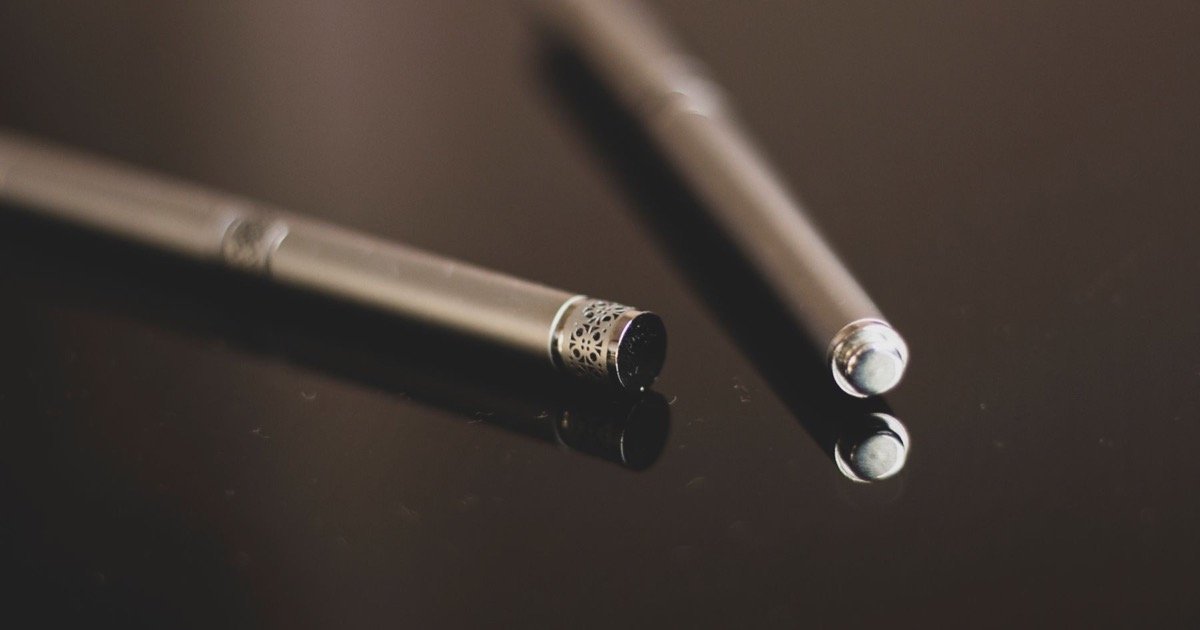
A hollow titanium pen is not simply a solid pen with less material. The internal cavity, wall thickness, nose support, mechanism interface, clip mounting, threads, and refill clearance form one connected design. Changing any of them can alter weight, balance, stiffness, sound, machining time, and the way the pen feels in daily use.
Searchers sometimes use “hollow point pen” to describe a hollow-bodied or hollowed-out pen. In product development, it is more useful to separate body construction from tip shape or marketing language. This guide compares hollow and solid-machined titanium pen bodies as engineering approaches, without assuming that either construction is automatically better.
What Does “Hollow” Mean in a Titanium Pen?
Nearly every refillable pen needs an internal passage for the cartridge. The practical distinction is how much surrounding material remains and how the body is produced. A lightweight hollow body may use a relatively thin, controlled wall. A heavier design may begin with a larger solid bar and retain more material after drilling, boring, and exterior machining. Some pens also use tube stock, separate nose pieces, press-fit inserts, or multiple threaded sections.
The finished geometry matters more than the starting-stock label. Buyers should ask for a section drawing that identifies minimum wall thickness, transitions, thread engagement, refill support, and the location of cross-holes or clip features.
Hollow vs Solid-Machined Titanium Pen Comparison
| Design factor | More aggressively hollowed body | Heavier solid-machined approach |
|---|---|---|
| Carry weight | Can reduce mass when the cavity and wall are optimized | Usually retains more mass, depending on external size and bore |
| Balance | Can move the center of mass toward the nose, mechanism, or clip | May feel more uniformly weighted but depends on every component |
| Wall sensitivity | More dependent on minimum wall, local transitions, and process control | More material can provide design margin, but geometry still governs |
| Machining | May require deeper boring, chip control, inspection, and careful workholding | Can involve more material removal and longer cycle time |
| Sound and feel | Thin sections may transmit clicks, refill movement, or impact differently | Added mass may damp some sensations, but assembly fit remains important |
| Customization | Internal space can be constrained by the structural wall and mechanism | May offer more local material for engraving or exterior features |
| Primary risk | Weak local sections, distortion, concentricity, or breakthrough | Excess weight, material use, and avoidable machining time |
Weight and Balance Matter More Than the Label
Users experience the complete pen, not the body in isolation. The refill, spring, bolt or clicker, cap, clip, glass breaker, and decorative parts all contribute to the center of mass. A hollow body can still feel tail-heavy if the mechanism is dense, while a heavier body can feel controlled when its mass is distributed near the grip.
Prototype the complete assembly and evaluate it posted, capped, or deployed in the intended mode. The comparison of bolt-action, click, and capped titanium pens explains how mechanism architecture affects the overall carry and writing experience. Refill geometry also changes the internal stack, so use the titanium pen refill guide before freezing the body length.
Control Minimum Wall Thickness and Transitions
A nominal wall dimension does not describe every local condition. Thread roots, clip screws, bolt slots, side holes, decorative grooves, tapers, and internal shoulders can create thinner sections. Abrupt thickness transitions can also affect machining behavior and local stiffness.
Define critical section views on the drawing and review worst-case tolerance conditions. A small body-diameter change or bore offset may leave much less material than the nominal model suggests. The titanium EDC tolerance guide shows why tolerances should be allocated around function rather than copied across every dimension.
Plan the Machining Sequence
Deep internal machining introduces practical questions: how the part is held, how chips leave the bore, how tools reach internal shoulders, and how concentricity is checked after exterior features are cut. Thin walls may move under clamping or finishing. A heavier construction may reduce some sensitivity, yet it can consume more stock and machining time.
Design review should consider the entire sequence, including turning, milling, threading, deburring, finishing, marking, cleaning, and assembly. A geometry that looks simple in CAD may be difficult to inspect or may require multiple setups. Connecting the design to Design for Manufacturing review can expose those risks before a cosmetic prototype is mistaken for production readiness.
Protect Refill and Mechanism Fit
The bore is not just empty space. It locates or clears the refill, spring, spacer, follower, and mechanism. A bore that is too tight may bind with dimensional variation or finishing residue. Too much clearance can contribute to rattle or inconsistent writing feel. The nose opening and rear support should control the refill where support is needed without creating unnecessary friction.
For a real example of a compact construction, see the mini hollow titanium tactical pen. Use product examples as design references, not as proof that the same wall, mechanism, or test plan fits a different size or use case.
Choose Finish and Marking With the Wall Design
Surface finish changes grip, appearance, edge definition, and the visibility of tool marks. It can also interact with already-thin features during preparation, blasting, tumbling, or polishing. Review the titanium surface finish guide and protect threads, fits, and critical edges in the process plan.
Deep engraving, milled windows, or decorative slots remove material. Confirm their depth and location against the actual minimum wall rather than treating branding as a late cosmetic addition.
Validate the Complete Pen
- Measure mass and center of balance on representative assemblies.
- Inspect minimum walls, bore alignment, threads, and feature intersections.
- Install every approved refill and verify extension, retraction, and tip support.
- Cycle the mechanism and listen for rattle, scraping, or changing actuation force.
- Evaluate grip, writing fatigue, pocket carry, clip use, and controlled drops.
- Repeat key checks after finishing and assembly, not only on raw machined parts.
- Document the approved construction, tolerance revision, and test configuration.
The broader checklist for a good titanium tactical pen helps connect body construction with clip retention, mechanisms, grip, and serviceability.
FAQ
Is a hollow titanium pen weak?
Not inherently. Strength and durability depend on alloy, geometry, minimum wall, feature placement, manufacturing quality, assembly, and the actual loads. A thin wall without sufficient design margin can be vulnerable, while a well-engineered hollow body can be appropriate for daily carry.
Is a solid titanium pen always heavier?
A body that retains more material is generally heavier when other dimensions and materials are equal. Complete-pen weight and balance still depend on the mechanism, refill, clip, cap, and accessories.
Does a hollow body make a pen rattle?
Not by itself. Rattle can come from refill clearance, springs, spacers, clips, mechanisms, or loose interfaces. Diagnose the source before tightening a bore that needs functional clearance.
Developing a Titanium Pen?
Browse the titanium tactical pen category and EDC Gear hub for related product decisions. Brands can review Alloywright’s development capabilities or share a titanium pen requirement for a project discussion.