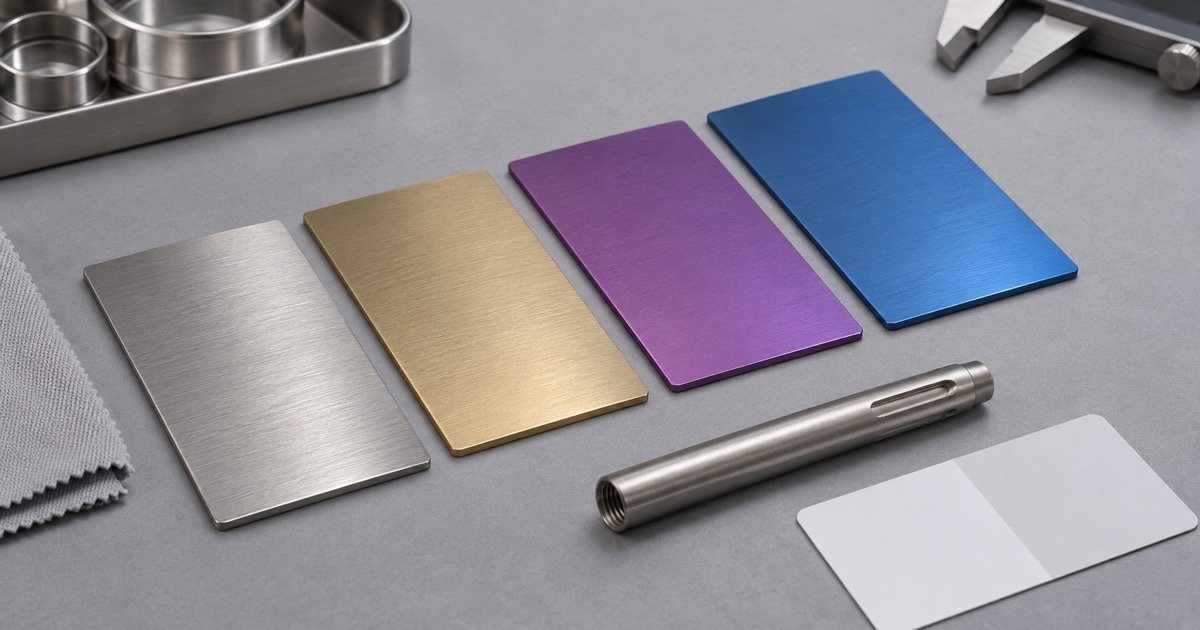
A blue titanium sample can look convincing in a supplier photo and different beside the finished product. A photograph is useful for communication, but approving appearance requires more information: the actual surface, part geometry, viewing conditions, and acceptable variation.
For EDC brands, a physical color reference should be part of a controlled specification. This article explains how to organize sample approval without expecting a screen image or a color name to define every production decision.
Define What Is Being Approved
Separate the color direction from the complete appearance requirement. A request for blue does not define gloss, texture, brushing direction, contact marks, transitions, or how adjacent parts should compare. Identify the product, material callout, finish sequence, and cosmetic zones before the approval meeting.
Start with natural titanium versus anodized colors for the terminology. Then use why anodized titanium colors vary between batches for the process factors that need supplier review.
Choose the Right Reference
| Reference | Useful for | Limitation |
|---|---|---|
| Screen image | Early discussion of color direction and styling | Display, camera, lighting, and image processing vary |
| Flat finish coupon | Comparing proposed processes on consistent surfaces | May not represent curved parts, recesses, or contact points |
| Finished product sample | Reviewing the actual geometry and assembly | One item does not show the full acceptable range |
| Approved range samples | Defining agreed appearance variation | Need identification, storage, and periodic condition review |
Use Representative Surface Preparation
Request samples that use the proposed material and preparation route. A polished coupon should not silently become the reference for a bead-blasted product. Document whether the sample represents the intended process or only an early appearance experiment.
The titanium surface finish guide helps organize finish choices. For textured parts, compare stonewashed and bead-blasted titanium before treating a flat color coupon as the final answer.
Review the Real Product Geometry
Curved pen barrels, clip edges, whistle openings, and pry bar recesses present different viewing angles and manufacturing access. Include representative components or a finished assembly when those features matter to the appearance decision.
Identify areas that naturally receive less visual attention and areas customers see immediately. A consistent cosmetic map makes inspection more useful than an instruction to match every surface equally. Include logo placement and any intentional color or finish boundaries.
Agree on Viewing Conditions
Use a consistent light source, background, distance, and orientation for visual review. Keep the sample and reference in the same environment rather than comparing photographs taken under different lamps. Rotate both parts in a repeatable way when the viewing angle changes the perceived result.
Record the inspection setup so the manufacturer and buyer can repeat the comparison. If instrumental color measurement is proposed, agree on the equipment, geometry, method, and acceptance criteria with the supplier. Do not invent a numerical tolerance that the actual process and part cannot support.
Inspect Clean Samples and Record Handling
Handle references consistently and follow the approved cleaning method. Fingerprints, deposits, residue, scratches, and handling marks can confuse comparison. Distinguish a changed surface condition from a manufacturing color difference before rejecting or adjusting the process.
The guide to cleaning titanium EDC gear without harming the finish provides maintenance context. Avoid using an unapproved chemical on the master reference because it may alter the condition being compared.
Approve a Range Where Appropriate
A single sample shows a target, but may not define the limits of acceptable variation. Ask the supplier to propose representative range samples when the process requires them. Review these on the intended finish and geometry rather than accepting an unexplained assortment of colors.
Label each reference with an identifier, project, revision, finish, approval date, and status. State whether it is a target, acceptable limit, rejected example, or development trial. Store rejected samples separately so they cannot be mistaken for approved production references.
Connect Appearance to Production Release
- Confirm the product and material specification.
- Record the surface preparation and intended appearance.
- Review coupons for initial direction.
- Evaluate production-intent components and the assembled product.
- Agree on viewing and cleaning conditions.
- Approve target and range references where needed.
- Record open issues and any permitted deviations.
- Release the drawing, finish reference, and inspection plan together.
Use the golden sample process to coordinate the physical references with the documents. A golden sample supports appearance review; it does not replace material, dimensional, or functional requirements.
Control Repeat Orders and Changes
Reference the same approved finish revision on repeat orders. Require review when material, preparation, geometry, marking, or the finishing route changes in a way that could affect appearance. Confirm the condition of retained references before comparing a new batch against them.
The repeat-order consistency guide explains configuration control more broadly. For a pen collection, compare the finish on the barrel, clip, and other visible components within the titanium tactical pen platform rather than approving each part in isolation.
FAQ
Can a Pantone or screen color be the only reference?
It can communicate an initial direction, but the supplier should confirm what is achievable on the actual titanium finish and provide physical samples.
Is a flat coupon enough?
It is useful early in development. Final review should include representative geometry when curves, recesses, or assembly relationships matter.
Should every batch match one sample exactly?
Define acceptance with the supplier using the intended process, viewing method, and approved variation. Avoid an undefined promise of exact visual identity.
Preparing a Titanium Finish Specification?
Explore the Titanium Knowledge hub and Alloywright development capabilities. Share your product and finish references for a project-specific review.