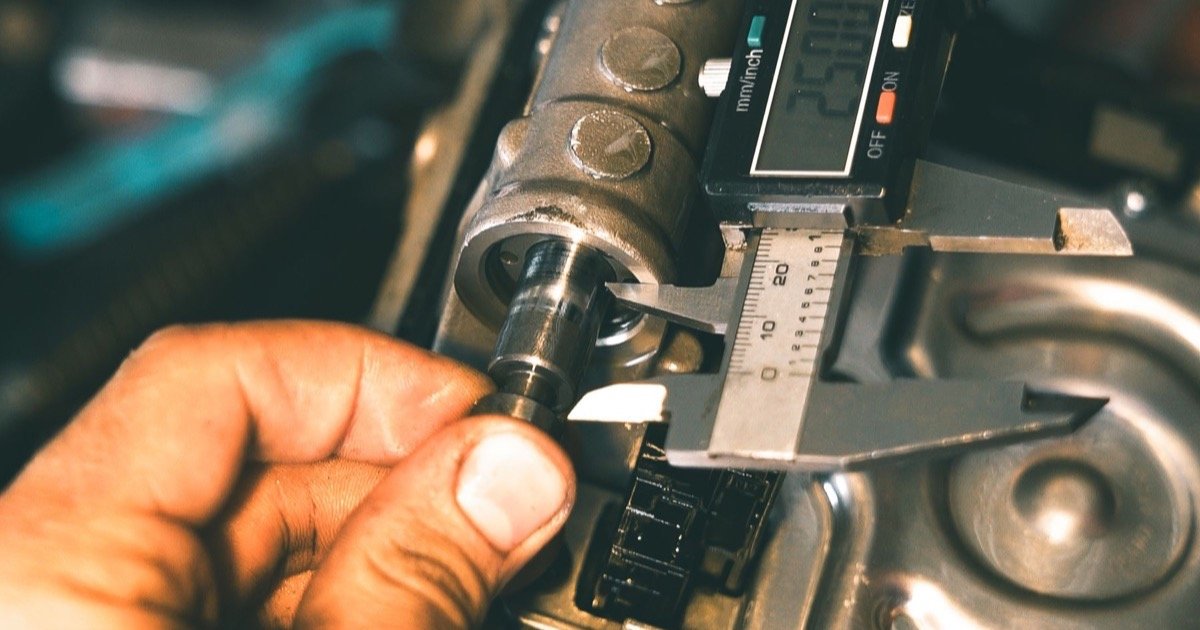
Titanium EDC prototype testing should answer a clear question: does the current design meet its intended requirements well enough to justify the next development step? A prototype is not only a visual sample. It is an opportunity to expose unclear specifications, weak interfaces, poor ergonomics, finish conflicts, and assembly risks before they become production problems.
Begin With Requirements and Revision Control
Record the prototype revision, material, process, finish, components, and purpose before testing. A proof-of-concept sample may validate a mechanism while ignoring final appearance. An engineering prototype may test dimensions and assembly. A pre-production sample should represent the intended production specification more closely. Mixing these purposes leads to approvals based on the wrong evidence.
Connect each test to a requirement and define what passes. “Feels good” can support user feedback, but it cannot replace a measurable criterion where fit or function matters. The distinction between an engineering sample and a pre-production sample helps teams set appropriate expectations.
Prototype Test Matrix
| Area | What to examine | Useful evidence |
|---|---|---|
| Dimensions | Critical features, datums, clearances, and interface stack | Measurement record linked to drawing revision |
| Function | Deployment, closure, retention, movement, and intended task | Defined cycles, observations, and failure notes |
| Ergonomics | Grip, reach, edges, handedness, glove use, and pressure points | User profile, task script, photos, and ratings |
| Carry | Pocket, keychain, pack, clip, noise, snagging, and accidental operation | Representative carry setup and inspection after use |
| Finish | Color, texture, contact marks, readability, and cleaning response | Controlled viewing conditions and approved range |
| Packaging | Protection, count, labels, movement, and unboxing | Pack-out checklist and transit trial |
Check Dimensions in Their Functional Context
Measure features that influence fit, movement, assembly, or user contact. Avoid measuring every dimension simply because it appears on a drawing. Prioritize critical interfaces such as threads, pivots, refill stacks, clip mounts, chamber openings, caps, gates, and attachment holes.
The measuring method must be suitable for the feature and tolerance. Measurement uncertainty and repeatability matter when decisions are close to a limit; NIST guidance on measurement uncertainty for dimensional inspection explains why results must be interpreted with the method in mind. Our article on choosing tolerances for titanium EDC products connects these checks to design intent.
Test Function Beyond a Single Demonstration
A mechanism working once does not establish repeatable behavior. Define a realistic cycle test and inspect at intervals. Record changes in force, play, alignment, noise, wear, fastener position, and user interaction. If the product includes replaceable parts, repeat the test after disassembly and reassembly.
Test misuse that is reasonably foreseeable without turning the prototype into an undefined destruction test. A pry tool, pen, whistle, or keychain connector has different boundaries. State those boundaries in instructions and avoid claims that the program has not verified.
Evaluate Ergonomics and Carry
Use representative hand sizes, clothing, gloves, and attachment systems. Observe how users retrieve, orient, operate, reset, and return the product. Sharp transitions, small controls, or an awkward center of mass may not appear in CAD. A pocket clip should be tested with real fabrics; the pocket clip design guide provides a focused checklist.
Carry testing should include movement, sitting, bending, and contact with nearby objects. Inspect for loosening, finish rub, rattling, snagging, and accidental operation after the trial.
Review Finish and Assembly Together
Surface finish changes dimensions, friction, color, texture, and visible contact patterns. Approve it on the intended alloy and geometry. Check masked areas, threads, moving interfaces, logo position, and assembly tool marks. The guide to titanium surface finishes for EDC products helps define what needs approval.
Document the assembly sequence and tools used. A prototype assembled by repeated hand fitting may conceal a design that is difficult to reproduce. Apply design-for-manufacturing review before treating the prototype as production-ready.
Include Environment, Cleaning, and Packaging
When relevant to the intended use, test water exposure, dirt, temperature, sweat, or coastal conditions with a defined method. Check function and appearance afterward rather than assuming material selection solves every issue. Include the non-titanium parts, coatings, adhesives, refills, springs, and packaging in the review.
A packaging trial should confirm that the product does not move, scratch, activate, or arrive with loose parts. Verify artwork revision, labels, quantities, and instructions at the same time.
Turn Results Into Decisions
- Record each test against the sample and drawing revision.
- Separate failures, observations, and optional improvements.
- Assign an owner and deadline to every required change.
- Update the specification rather than relying on meeting notes.
- Build the next sample only after affected requirements are clear.
- Retest changes and any dependent interfaces.
FAQ
How many prototypes are needed?
There is no universal number. It depends on design novelty, risk, test coverage, changes, and whether multiple samples are needed to separate variation from a one-off result.
Should the first prototype use the final finish?
Not always. Early samples may focus on geometry or mechanism, but finish must be tested before final approval because it can affect appearance and interfaces.
Can a passed prototype go directly to mass production?
Only when its purpose, process representation, specifications, and evidence justify that decision. Many projects still need pre-production confirmation.
Planning a Titanium EDC Prototype?
Use the Product Development hub and Alloywright development capabilities to structure the path from requirements to samples. Share your product brief and test priorities for a project-specific feasibility discussion.