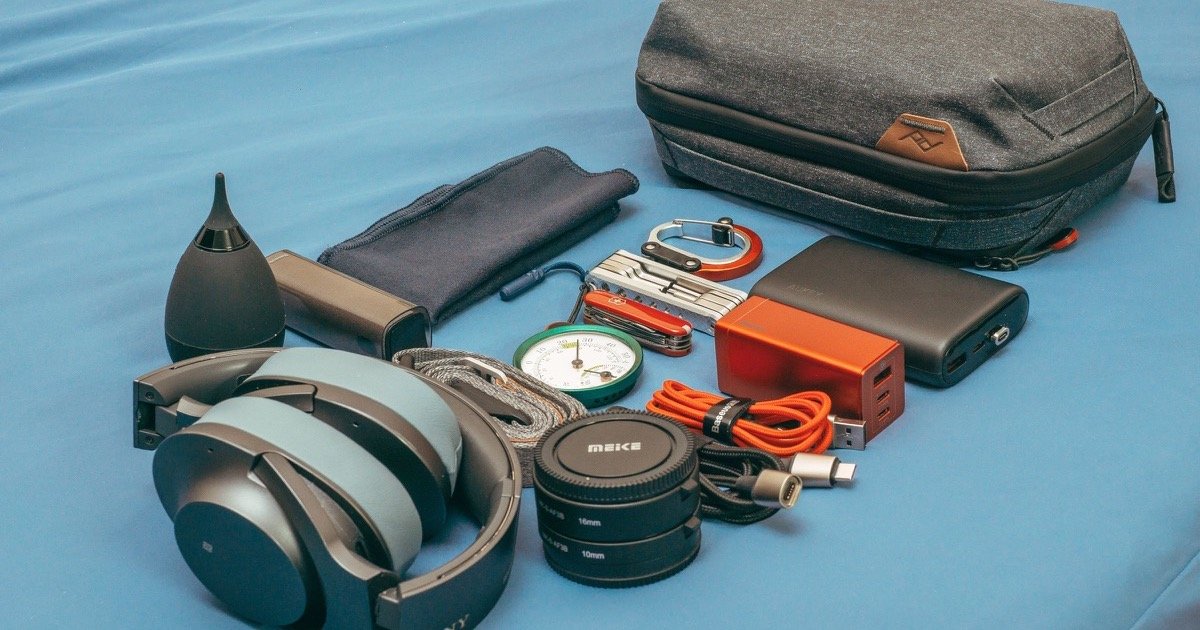
A lightweight EDC kit is not simply a smaller pile of gear. It is a deliberately edited system that covers frequent tasks without making every pocket feel like a toolbox. Start with situations you actually encounter, not a generic shopping list.
Start With Tasks, Not Products
List what you used during recent weeks: writing, opening packages, handling keys, making a minor adjustment, or signaling in an emergency. Separate routine jobs from rare scenarios. A tool that solves several real tasks may deserve its weight more than multiple specialized tools that never leave the organizer.
Context matters. An office commute, workshop, and backcountry trip have different failure modes. Build a small daily core, then add context-specific modules.
Run a Function Audit
| Question | What it reveals | Action |
|---|---|---|
| Did I use it recently? | Whether it answers a recurring need | Keep frequent tools in the core kit |
| Does another item do the same job? | Duplicate capability | Choose the safer, simpler option |
| Is it awkward to carry? | Poor geometry or placement | Change form factor, clip, or location |
Reduce Bulk Before Removing Capability
Weight is only part of comfort. Thickness, sharp corners, loose parts, and poor pocket placement can make a compact kit cumbersome. Flat tools usually ride more comfortably. A secure clip controls orientation, while a keychain can consolidate small items if it does not create tangles.
Titanium can suit selected components because it combines corrosion resistance, low density, and a premium feel. Stainless steel may be better when cost, stiffness, magnetic behavior, or a manufacturing process matters more. Compare both in our guide to titanium vs. stainless steel for EDC products.
Choose Multi-Function Tools Carefully
Feature count is not the same as utility. Each function needs enough access, leverage, grip, and clearance to work safely. An added opener or driver can weaken an edge or create a pressure point. Evaluate the full interaction. For compact pry tools, consider tip geometry, hand comfort, attachment, and intended limits; see our guide to choosing an EDC pry bar.
Use a Core-and-Module System
- Daily core: items used across most environments.
- Work module: job-specific tools and credentials.
- Outdoor module: navigation, signaling, fire, repair, or weather items appropriate to the trip.
- Travel module: charging, identification, and destination-specific essentials.
Carry the edited setup through normal work, errands, and recreation. Record each time you use something, wish you had removed it, or reach for an item left at home. Change one variable at a time.
FAQ
What belongs in a lightweight EDC kit?
There is no universal list. Start with functions you perform regularly, then account for environment, local rules, and the consequence of missing a critical item.
Is titanium always best for lightweight EDC?
No. Titanium is useful where low weight, corrosion resistance, and finish options support the design. Steel, aluminum, polymers, or mixed materials can be better elsewhere.
Should emergency gear count as daily carry?
Yes when the environment and risk justify it. Compact signaling equipment may be sensible for outdoor, travel, or lone-worker contexts.
Developing a Compact EDC Product?
Alloywright helps brands turn EDC concepts into manufacturable titanium and stainless steel products. Contact us to discuss priorities, materials, prototyping, and OEM options.