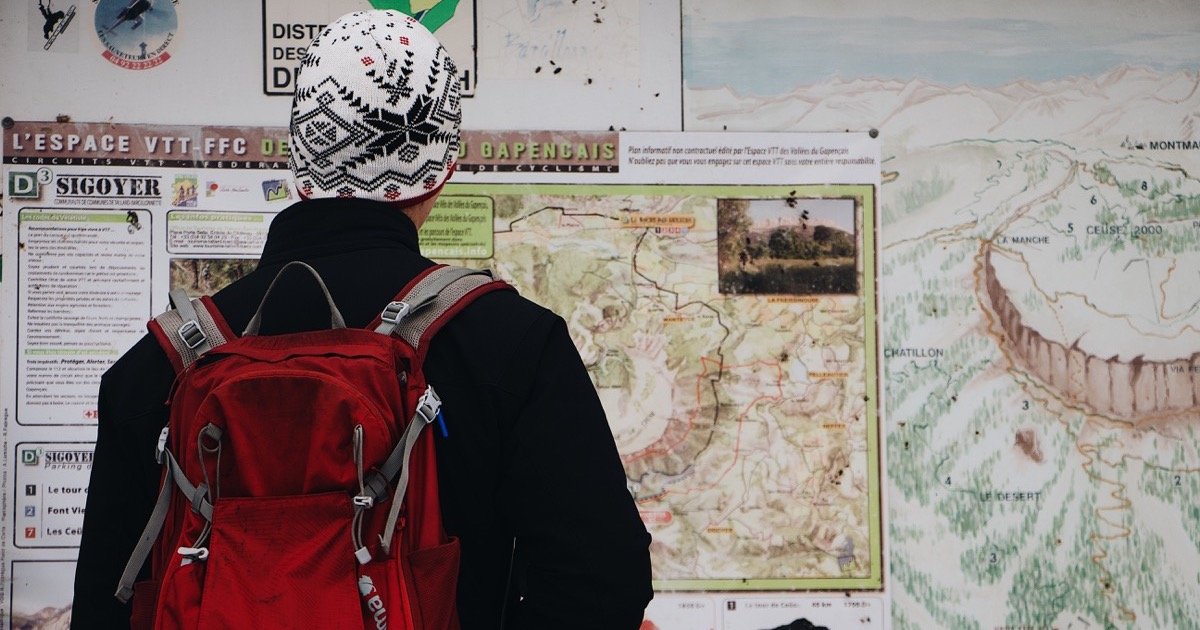
A survival whistle is useful only when it is accessible, understood, and maintained. Carrying one deep inside a pack or relying on improvised signals can reduce its practical value. A whistle is a signaling aid, not a guarantee of rescue.
Before the trip
Attach the whistle where it can be reached with either hand, without removing the pack. Inspect the body, chambers, mouthpiece, and attachment. Confirm that passages are clear and the lanyard or clip is secure. Learn local emergency procedures and tell someone your route.
How to produce a clear signal
- Move to a safe position where sound can travel.
- Face toward likely responders or open terrain.
- Seal your lips around the mouthpiece without blocking outlets.
- Use firm, controlled breaths rather than exhausting continuous blowing.
- Pause and listen for a reply.
- Repeat the locally recognized distress pattern where applicable.
Signal conventions vary by region and organization. Verify current local guidance before travel; do not rely on one universal pattern.
Whistle versus voice
| Factor | Whistle | Shouting |
|---|---|---|
| Effort | Can conserve voice when used in controlled bursts | Can become tiring and strain the voice |
| Sound character | Distinct, repeatable tone | Varies with user fatigue |
| Communication | Limited to simple signals | Can communicate words at short range |
| Limitation | May be blocked, lost, or unheard | May be masked by terrain, wind, or distance |
Where to carry it
Good locations include a shoulder strap, life-jacket attachment, jacket zipper, or dedicated emergency-kit point. Avoid long loose cords around the neck where snag risk exists. Children and group members need age-appropriate instruction and supervision.
Weather and terrain
Wind, trees, cliffs, buildings, waves, and precipitation change how sound travels. Reposition only when safe. In cold conditions, confirm that the whistle remains usable with gloves. After exposure to water, drain and clear the chambers before relying on it.
Care and inspection
- Rinse away dirt or salt with appropriate clean water
- Clear passages without damaging acoustic edges
- Dry before storage
- Check attachment points and lanyards
- Replace damaged components
- Test periodically in a considerate location
For structure choices, compare single-, dual-, and triple-tube whistles.
What brands should validate
Product teams should define an acoustic test setup, chamber geometry, material, finish, drainage, attachment, packaging, and instructions. Unsupported decibel or range claims should not be published. Internal confirmation is required for specific performance figures.
Alloywright supports outdoor and EDC development through its manufacturing capabilities and offers a titanium emergency whistle platform.
Frequently asked questions
How many whistle blasts mean distress?
Conventions differ. Check the guidance used by local authorities, parks, clubs, or maritime organizations before departure.
Is a metal whistle suitable in cold weather?
Material affects touch and condensation. Evaluate the complete design in the intended environment and follow safe-use instructions.
Can a whistle replace a communication device?
No. It complements navigation, communication, trip planning, and other emergency equipment.
Using a whistle as part of a group plan
Before leaving, groups should agree on simple signals, regrouping points, and what to do if members separate. Each person should know where their whistle is attached and practice reaching it without looking. A signal has limited value if companions interpret it differently.
Brands preparing instructions should distinguish routine attention signals from distress use and direct customers to local guidance. Packaging should not imply that a whistle replaces communication equipment, navigation skills, weather planning, or professional rescue services.