The right titanium surface finish is not just a color decision. It affects grip, cosmetic consistency, wear appearance, cleaning, branding, inspection criteria, and production cost. For an EDC product team, choosing a finish too late can also force changes to dimensions, masking, logo application, or the approved sample.
This guide compares the finishes commonly considered for titanium EDC products and explains how to select one based on use, appearance, and manufacturability. The goal is not to identify one universal “best” finish, but to help you write a finish requirement that a supplier can prototype and reproduce.
What is a titanium surface finish?
A surface finish is the condition created on a part after forming or machining. It may come from a mechanical process, such as brushing or blasting, or from a later treatment, such as anodizing or coating. Many commercial finishes are actually process sequences. A colored anodized part, for example, may first be machined, polished, brushed, or blasted because the starting texture remains visible through the anodized layer.
Finish terminology is useful for early discussion, but a name alone is rarely a complete production specification. “Matte,” “stonewashed,” and even “blue anodized” can describe visibly different results. A robust specification identifies the process sequence, target appearance, protected areas, acceptable variation, and approved reference sample.
Why finish selection matters for EDC products
EDC products are handled, carried beside other objects, and viewed at close range. A finish must therefore be evaluated as part of the product experience rather than as decoration added after engineering is complete.
- Grip and feel: A polished surface feels different from a blasted or stonewashed one.
- Wear appearance: Scratches, edge polishing, and contact marks are more visible on some finishes.
- Color consistency: Surface preparation and process control influence the appearance of anodized and coated parts.
- Fit and assembly: Mechanical finishing and coatings can affect critical mating areas if they are not controlled or masked.
- Brand expression: Texture, gloss, color, and logo contrast influence how a product family looks across models.
- Inspection: Cosmetic requirements need measurable or visual acceptance criteria.
Common titanium finishes for EDC products
| Finish | Typical appearance | Useful when | Main control point |
|---|---|---|---|
| As-machined | Visible tool paths; technical character | Machining detail is part of the design | Tool-path consistency and burr removal |
| Brushed | Directional satin grain | A controlled linear texture supports the form | Grain direction and blending at edges |
| Polished | Smooth, reflective surface | A bright presentation is desired | Surface preparation and handling marks |
| Bead-blasted | Uniform, low-gloss matte texture | A subdued technical appearance is preferred | Media, pressure, cleanliness, and part handling |
| Stonewashed | Irregular, pre-worn texture | Daily contact marks should blend into the finish | Media, cycle, edge condition, and batch consistency |
| Anodized | Interference color with the base texture still visible | Color differentiation or decorative branding is needed | Surface preparation, voltage/process control, and acceptable color range |
| PVD or other coating | Deposited colored surface, often darker or more opaque | A coated visual effect is part of the product concept | Coating system, adhesion requirements, masking, and thickness |
As-machined titanium
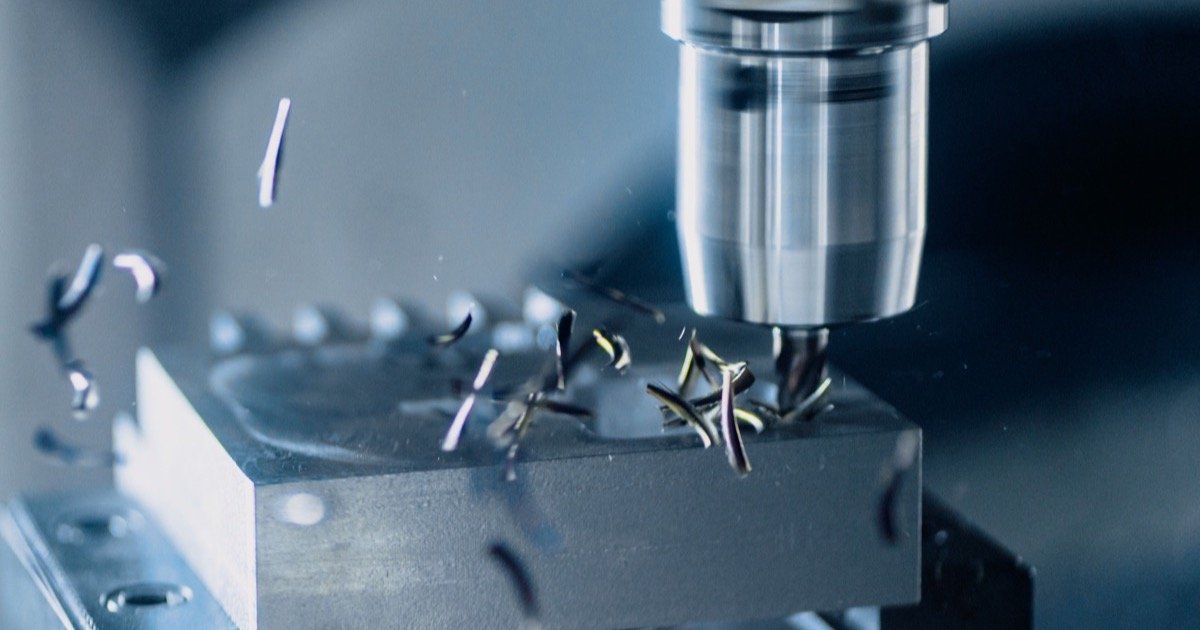
An as-machined finish preserves the visual evidence of CNC cutting. It can suit products whose geometry and machining are meant to look technical, such as a compact pry bar, pen body, or keychain tool. It may also reduce secondary finishing compared with a highly polished specification.
However, “as-machined” should not mean uncontrolled. Specify whether circular or linear tool paths are intentional, how burrs and sharp edges are removed, and which handling marks are acceptable. Tool wear, feed strategy, fixturing, and different machining directions can make nominally identical surfaces look inconsistent.
Brushed and polished titanium
Brushing creates a directional grain that can visually lengthen a pen body or clarify the orientation of a flat tool. It works best when the product geometry allows the grain direction to remain deliberate. Recesses, intersecting faces, clips, and complex contours can make manual blending more difficult.
Polishing produces a smoother, brighter surface, but the preparation standard matters. Fine scratches, waves, and handling marks can become easier to see under reflective lighting. For a production program, define gloss expectations with physical references rather than relying on marketing terms such as “mirror finish.”
Bead-blasted titanium
Bead blasting produces a diffuse matte appearance by impacting the surface with controlled media. It is frequently considered for EDC products because it reduces glare and creates a uniform-looking texture across suitable geometries.
The result depends on media type and condition, pressure, distance, angle, exposure time, and cleaning. Contaminated media or inconsistent handling can change color and texture. Threaded areas, precision fits, sealing surfaces, and already-finished components may require protection. The sample approval should therefore identify both the visual target and all masked areas.
Stonewashed titanium
Stonewashing creates a non-directional, deliberately worn appearance through controlled contact with finishing media. On frequently carried tools, the irregular pattern can make later contact marks less visually prominent than they would be on a bright polished surface.
It is not automatically suitable for every component. Media shape, compound, cycle time, part loading, and edge geometry influence the result. Fine engraving, thin edges, threaded areas, and fitted mechanisms need specific review. For assembled products, decide whether parts are finished separately or together and how the process affects contact surfaces.
Anodized titanium
Titanium anodizing creates an oxide layer that produces color through light interference rather than conventional pigment. This allows distinctive colors while retaining the underlying surface texture. It also means the visible result can shift with surface preparation, oxide thickness, lighting, viewing angle, cleanliness, and part geometry.
A digital color value is not enough to approve anodized titanium. Use a physical sample, define an acceptable range, and evaluate production parts under agreed lighting. If several components must appear matched, review them as an assembly. High-contact areas may change in appearance as the surface wears, so prototypes should be handled and carried before final approval.
PVD and other coated finishes
A deposited coating can create colors and visual effects that differ from anodized titanium. Because it adds a coating system rather than only changing the oxide layer, the engineering review should cover substrate preparation, coating thickness, adhesion expectations, masking, and compatibility with moving or threaded parts.
Do not select a coating from color alone. Ask the supplier to confirm the proposed coating system and validate it against the product’s intended handling, environment, and assembly. Performance or durability claims should be tied to an agreed test method rather than inferred from the finish name.
How to choose a titanium finish
1. Start with the use environment
Describe where the product will be carried and what it will contact. A tactical pen that moves against keys, a whistle carried on a backpack, and a pry bar used against hard surfaces will not age in the same way. Note exposure to moisture, sweat, salt, soil, cleaning agents, and abrasion. If a particular performance level is required, define the test and acceptance criterion for the project.
2. Decide how wear should look
Some brands want a product to develop visible patina; others expect the first-use appearance to remain as consistent as practical. A pre-worn stonewashed texture, a directional brush, a bright polish, and an anodized color all reveal use differently. Evaluate handled prototypes rather than judging only untouched samples.
3. Review geometry, tolerances, and assembly
Finish selection should occur before drawings and tolerances are frozen. Identify threaded regions, pivots, clips, sealing faces, press fits, mating diameters, electrical contact areas, and logo locations. The supplier can then recommend where finishing allowances, masking, or sequence controls are required.
4. Match the finish to the brand system
A single attractive sample does not guarantee a coherent product family. Compare the finish on different part sizes and geometries. Establish whether the brand prioritizes exact cross-model matching, an intentional range, or a naturally variable finish. Consider how the logo method—engraving, laser marking, printing, or another process—contrasts with the selected texture and color.
5. Build an inspection standard
Translate aesthetic language into an approval package. Include an approved sample or range samples, surface photographs, protected zones, viewing conditions, critical faces, and named defect limits. Agree on whether inspection occurs on individual parts or finished assemblies. This turns “matte gray” from an opinion into a repeatable production requirement.
Common finish-selection mistakes
- Selecting from a screen image: Screens, photography, and lighting can misrepresent texture and anodized color.
- Approving only the best sample: A production decision needs an acceptable range, not only an ideal reference.
- Ignoring process sequence: Machining, deburring, blasting, anodizing, logo application, and assembly order affect the final result.
- Applying one specification to every surface: Cosmetic faces and functional fits may need different controls.
- Testing appearance but not use: Carry and handling trials reveal where polishing, scratching, and color change may occur.
- Changing finish after dimensions are approved: Late changes can affect masking, fits, lead time, and cost.
A practical finish brief for your manufacturer
Include the following information in your RFQ or development package:
- Product name, intended use, and target market
- Titanium grade, if already fixed, or the required performance
- Finish name and complete process sequence, where known
- Reference sample or images showing the intended direction
- Target color, gloss, texture, and acceptable variation
- Cosmetic priority surfaces and protected functional zones
- Threaded, fitted, moving, or sealing areas
- Logo method, position, size, and desired contrast
- Prototype quantity and expected production quantity
- Handling, environmental, or durability tests required
- Packaging protection needed to prevent part-to-part marking
If you are still preparing the project package, use Alloywright’s guide on how to prepare a custom titanium product specification. For a broader material decision, compare titanium and stainless steel for EDC products.
How Alloywright approaches finish development
Alloywright supports titanium and stainless-steel outdoor and EDC product development from existing products, reference samples, sketches, drawings, or CAD files. Before production, the project review can cover material, process, dimensions, appearance, branding, packaging, and inspection requirements.
Finish selection is coordinated with geometry and manufacturing rather than treated as an isolated cosmetic choice. Teams can review options on representative prototypes, record the approved process, and establish a repeatable visual standard before production. See Alloywright’s product development and manufacturing capabilities or review a titanium tactical pen platform to consider how finish, branding, and product structure work together.
Frequently asked questions
Which titanium finish hides scratches best?
No finish makes a carried product immune to scratches. A stonewashed or other deliberately varied texture often makes new contact marks less visually prominent than a polished, uniform surface. The actual result depends on product use, surface preparation, and the type of contact, so handle-tested samples are the best basis for approval.
Is bead-blasted titanium the same as matte titanium?
Not necessarily. “Matte” describes appearance, while bead blasting is a process. Different media and parameters can create different matte textures. A specification should identify the process and approved appearance rather than use “matte” alone.
Why can anodized titanium colors vary?
The observed color is influenced by the oxide layer, surface preparation, lighting, viewing angle, cleanliness, and part geometry. Production approval should use physical references and an acceptable range rather than a screen color.
When should the finish be selected?
Select a preferred finish during early design and validate it during prototyping, before final tolerances, branding, packaging, and inspection standards are locked. This gives the manufacturer time to review masking, finishing allowances, process sequence, and handling protection.
Can different finishes be combined on one titanium product?
Potentially, but feasibility depends on geometry, masking, processing sequence, and the desired transition between surfaces. The design should be reviewed with the manufacturer, and the final combination requires sample approval. Internal confirmation is required for any specific product configuration.
Choose a finish that can become a specification
A successful titanium finish balances appearance, feel, wear behavior, geometry, branding, and manufacturing control. The key deliverable is not a finish name; it is an approved, documented standard that can be applied to future batches.
If you are developing a titanium EDC product, share your drawing, reference sample, intended use, and finish direction with Alloywright for review.